


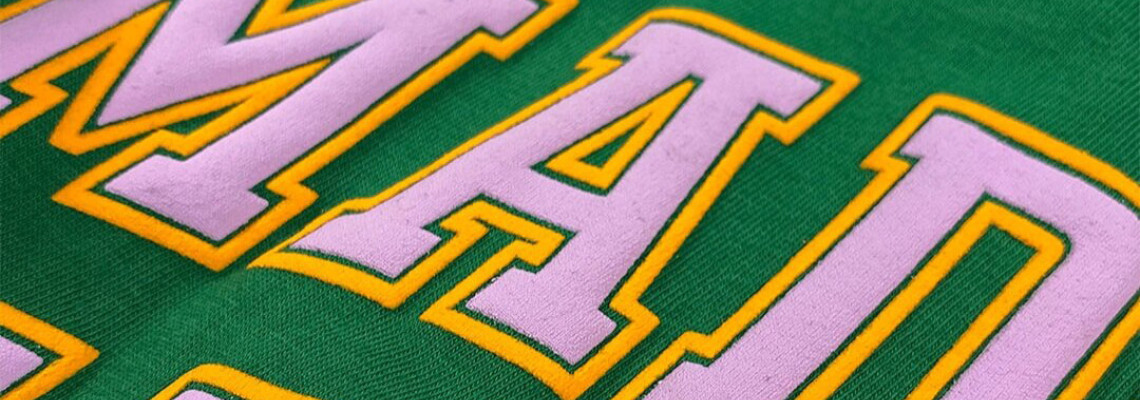
Puff printing is a technique based on plastisol ink modified by adding a reactive foaming agent. When exposed to heat, the ink expands, creating a unique "puffy" effect that makes prints on clothing stand out. This method is perfect for creating 3D prints on t-shirts and hoodies.
How Puff Printing Works
Puff ink adds a 3D effect to prints on clothing. Puff printing is an impressive technique used on t-shirts and hoodies. During the curing (drying) process, the ink expands, giving the print a three-dimensional, rounded-edge appearance.
An alternative to embroidery.
Due to its unique texture, puff printing can replace embroidery in larger designs. However, it’s not ideal for very fine details or small fonts.
You can highlight specific elements of your design by applying puff ink to the entire design or just selected parts to draw more attention to key elements of the print.


Best Practices for Designing with Puff Printing
Puff printing has no significant limitations, except for designs with small details. Avoid lines thinner than 1–2 mm. For the best results, opt for thick lines and minimal fine details. If your design includes text, choose a font with thick lines to make your artwork stand out more effectively.
How Puff Printing is Done
Any color plastisol ink can be used for puff printing, but a puff additive must be added. The recommended ratio is 5% to 15%, depending on the desired effect. The amount of puff additive affects how much the ink expands.
The lower the mesh count on the screen, the more ink passes through, resulting in a more pronounced puff effect.
Once the puff ink is applied to the garment, it goes through a drying tunnel, where the heat activates the puff additive, causing the ink to expand, just like bread rising in an oven!
Pros and Cons of Puff Printing

Advantages of Puff Printing
- Fast printing technique, ideal for large quantities
- Can be combined with other printing effects
- Suitable for multi-color designs
- Highly durable – does not crack or peel
- Professional finish
- Can be used on most types of fabrics
- An excellent choice for **3D prints on clothing**
Disadvantages of Puff Printing
- Setup costs make it less suitable for small orders
- Not ideal for highly detailed designs
- Cannot be used for raster graphic prints
- Cannot be used next to foil, flock, or high-density printing effects